When Grease Thickness Requires Cleaning
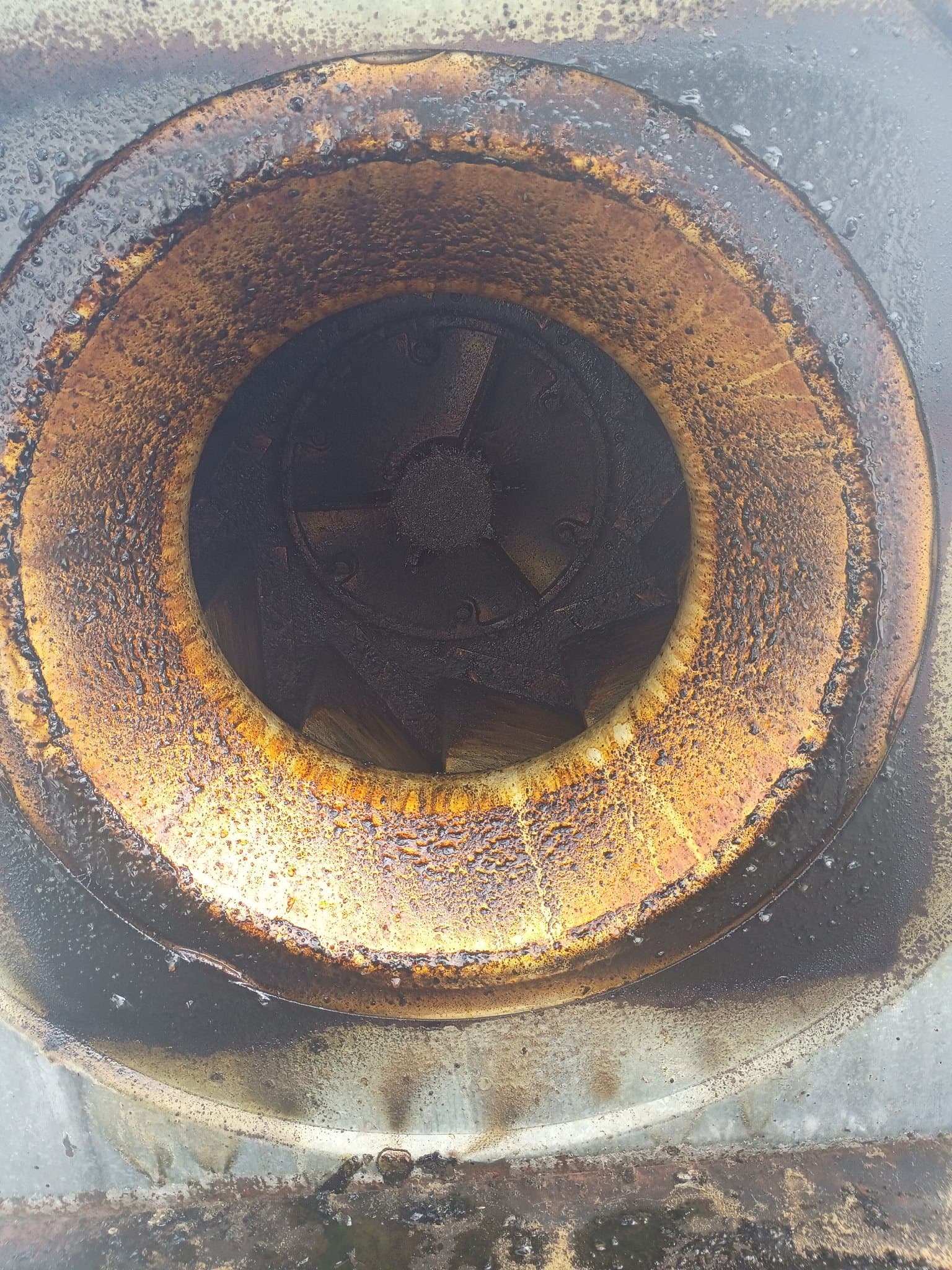
Grease left in a hood, duct, or fan is fuel. Once buildup hits the NFPA 96 trigger thickness, an inspection note is not enough—the system has to be cleaned. ProKEC measures against those thresholds and cleans Raleigh, Durham, and Chapel Hill kitchens to the standard.
What grease thickness requires cleaning?
Under NFPA 96 section 12.6.1.1, as ProKEC states it on the standards page, surfaces are cleaned until combustible contaminants are down to 0.002 inch, or 50 µm. Cleaning is required when buildup reaches 0.078 inch, or 2000 µm. Inside a fan housing the trigger is thicker: 0.125 inch, or 3175 µm.
0.078 inch is just under one-tenth of an inch. 0.125 inch is one-eighth of an inch. The clean-to level, 0.002 inch, is a thin film measured in thousandths of an inch. A hood that looks dull can still be under the trigger, and a hood that looks wiped can hide a heavier deposit in the duct or fan.
The point of the three numbers is to separate “we looked” from “we removed the fuel.” An inspection that finds grease at or past the trigger is not finished when the note is written. The accessible surfaces have to be cleaned down toward 0.002 inch.
ProKEC uses this section as published on our NFPA 96 standards page. It is the same summary operators already see there: clean to 0.002 inch, clean when deposits reach 0.078 inch, and use 0.125 inch inside a fan housing. This guide puts that rule in the form of a direct answer.
| Measurement | Depth | What it means |
|---|---|---|
| Clean-to level | 0.002 in (50 µm) | Combustible contaminants removed down to this depth |
| Cleaning trigger | 0.078 in (2000 µm) | Buildup at this depth requires cleaning |
| Fan-housing trigger | 0.125 in (3175 µm) | Higher trigger used inside a fan housing |
How is an inspection interval different from a cleaning?
Table 12.4 sets how often the exhaust system is inspected. Solid-fuel cooking is monthly. High-volume cooking, including 24-hour, charbroiling, and wok, is quarterly. Moderate volume is semiannual. Low volume, such as churches, day camps, seasonal businesses, and senior centers, is annual. The inspection looks for grease. Section 12.6.1.1 decides whether that visit becomes a cleaning.
A calendar interval is not a cleaning interval. A moderate-volume kitchen inspected every six months might need a clean at that visit, or it might not, depending on the depth of the deposit. A high-volume line inspected every quarter can still be under 0.078 inch if the previous clean was thorough and the menu is lighter than the label suggests.
Saying “about every three months” describes the high-volume row of Table 12.4. It is not the rule for every café, dining hall, or commissary. Solid fuel is monthly because that row exists. Low-volume operations are annual because that row exists. ProKEC still confirms the row against the equipment and the menu during a free evaluation, because the table names cooking volume and fuel type, not a street address.
Local fire authorities can expect a tighter program than the table. This page does not replace your authority having jurisdiction. It states the inspection schedule ProKEC already publishes, then ties it to the thickness rule that tells you when looking is not enough.
- Systems serving solid fuel cooking operations — monthly
- Systems serving high-volume cooking operations (24-hour, charbroiling, wok) — quarterly
- Systems serving moderate-volume cooking operations — semiannually
- Systems serving low-volume cooking operations (churches, day camps, seasonal businesses, senior centers) — annually
Where do the thickness numbers apply?
The thresholds apply to surfaces that collect grease-laden vapor from commercial cooking: hood interiors, filters and other grease-removal devices, accessible ducts, and the exhaust fan. The fan housing uses the higher 0.125 inch trigger. A wipe of the hood face does not measure the duct or the fan, and it does not satisfy the clean-to depth on surfaces nobody opened.
Grease-laden vapor leaves the appliance, passes the filters, and travels the duct to the fan. The heaviest deposit is often past the part a manager can see from the cook line. If the fan housing is the only place at 0.125 inch, that housing still has to be cleaned. If the duct is at 0.078 inch and the hood looks acceptable, the duct is the scope.
Sections without a clean-out cannot be measured or cleaned honestly. ProKEC documents inaccessible sections so the owner can schedule repairs instead of receiving a report that implies the whole run was reached. Frequency alone does not fix a duct that has no access panel.
How does ProKEC use these thresholds?
ProKEC cleans commercial kitchen hoods, ducts, and fans to NFPA 96 standards for restaurants and facilities in Raleigh, Durham, and Chapel Hill. A free evaluation reviews hoods, filters, access panels, ducts, and fans. The recommended clean follows the grease we can see and reach, including the 0.078 inch and 0.125 inch triggers, not a single interval for every address.
After the job, ProKEC issues a service report and a certificate of compliance. The certificate side of the record—company name, the person who did the work, and the date—is covered in the companion guide on what to keep after hood cleaning. Thickness tells you the system needed the clean. The certificate shows that the clean happened.
No public page can measure your fan housing. Access, duct length, and a prior incomplete clean change the scope. If you are unsure which Table 12.4 row fits the kitchen, ask the fire inspector which category they use, then book an evaluation so the next clean matches that category and the deposit that is actually there.
How do you apply the thresholds on site?
Match the kitchen to one Table 12.4 row, inspect on that cadence, and compare grease depth with 0.078 inch on exhaust surfaces and 0.125 inch in the fan housing. Clean accessible surfaces toward 0.002 inch when either trigger is met. File the certificate and the written report, then put the next inspection on the calendar from the table.
- Name the Table 12.4 row. Solid fuel, high volume, moderate volume, or low volume. Use the cooking that the hood actually serves.
- Inspect on that cadence. Monthly, quarterly, semiannually, or annually, as that row states. The visit is an inspection until the depth says otherwise.
- Compare the deposit with the trigger. 0.078 inch on hoods, filters, and accessible ducts. 0.125 inch inside the fan housing.
- Clean what you can reach. Bring combustible contaminants down toward 0.002 inch on the surfaces in scope. Do not describe an unopened duct as cleaned.
- Keep the record and book the next look. Certificate with company, person, and date, plus a written report to the owner. Schedule the next inspection from the same table.
What should be true before you call the system maintained?
A maintained exhaust system has a known inspection row, a recent look at hoods, ducts, and the fan, and a clean on file if grease met 0.078 inch or the fan housing met 0.125 inch. The record names the company, the person, and the date. Any section that could not be reached is written down.
- The kitchen is assigned a Table 12.4 row, not a generic three-month habit
- Hoods, filters, accessible ducts, and the fan were included in the last inspection
- Grease at or past 0.078 inch was cleaned, not only noted
- Fan-housing grease was judged against 0.125 inch, not the general trigger
- Accessible surfaces were cleaned toward the 0.002 inch level
- A certificate and written report are on site for that job
- Inaccessible sections are listed for repair instead of marked complete
- The next inspection date follows the table row for this kitchen
Questions about grease thickness
Operators usually ask where the cutoff is, why the fan is different, and whether a clean hood face covers the duct. The answers below restate the figures ProKEC already publishes for section 12.6.1.1 and Table 12.4. They are educational. Your fire inspector can require a stricter local program.
What grease thickness requires commercial hood cleaning?
NFPA 96 section 12.6.1.1, as ProKEC publishes it, requires cleaning when combustible contaminants reach 0.078 inch (2000 µm). The clean removes those contaminants down to 0.002 inch (50 µm) on the surfaces in scope.
What is the fan-housing grease limit?
Inside a fan housing the trigger is 0.125 inch (3175 µm). That is higher than the 0.078 inch trigger used on other exhaust surfaces. The fan still has to be opened and judged on its own.
How often is the system inspected under Table 12.4?
Solid-fuel systems monthly. High-volume systems, including 24-hour, charbroiling, and wok, quarterly. Moderate-volume systems semiannually. Low-volume systems, including churches, day camps, seasonal businesses, and senior centers, annually.
Does a clean hood face mean the duct is clean?
No. The hood face is one surface. Filters, ducts, and the fan collect grease past the line of sight. A wipe of the canopy does not measure those sections and does not meet the clean-to depth on surfaces that were not reached.
Who applies these thresholds on a ProKEC job?
ProKEC cleans hoods, ducts, and fans to NFPA 96 standards in Raleigh, Durham, and Chapel Hill, and leaves a service report and certificate of compliance. A free evaluation is how we match scope to the deposit and the access that exists.
What if part of the duct cannot be reached?
That section cannot be claimed as cleaned. ProKEC writes down inaccessible sections so repairs can be scheduled. The thickness rule applies to surfaces that can be inspected and cleaned.
Related industries
Ready for commercial hood cleaning in Raleigh—or a free evaluation first?
Book a free evaluation, review our commercial kitchen hood cleaning program, or call the office—after-hours crews and NFPA 96 documentation included.